When you're already performing at an exceptional level, where do you find the next improvement?
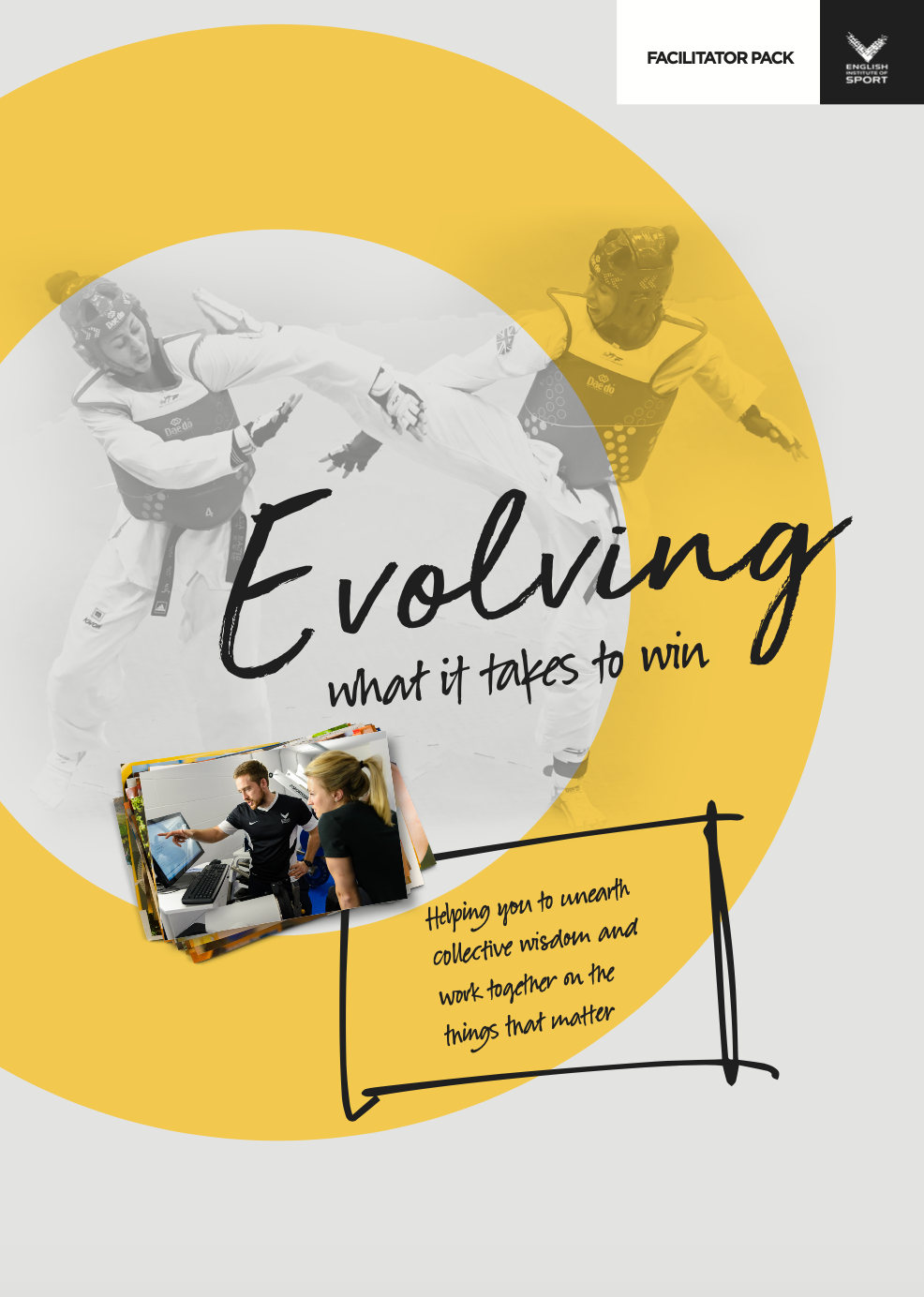
In elite sport, the smallest margins can make the biggest difference. Athletes, coaches and performance specialists dedicate years to finding marginal gains: improvements in technique, nutrition, recovery, equipment and preparation.
But what happens when an organisation has already optimised so much of its technical performance?
Sometimes, the next opportunity isn't found in the equipment or the data. It's found in the people.
The challenge of getting even better
At the London 2012 Olympic Games, Great Britain achieved an extraordinary result, securing 65 medals.
The challenge was to build on that success at Rio 2016, without the advantage of competing on home soil.
The English Institute of Sport (EIS) was already operating within one of the world's leading high-performance sporting systems. Its coaches, scientists and practitioners were experts in their respective disciplines.
Yet there was an opportunity to explore performance from another perspective.
In 2015, Perspectiv worked with EIS professionals to introduce approaches to Facilitative Leadership and Creative Problem Solving. The objective wasn't to replace existing expertise, but to help people make even better use of it.
1. Expertise alone isn't enough
High-performing organisations often invest heavily in technical skills, technology and specialist knowledge.
All are important, but they don't automatically guarantee that people work effectively together.
How do teams share knowledge? How comfortable are people challenging established thinking? How do they respond when a problem has no obvious solution?
These are the human factors that can influence performance just as significantly as technical capability.
2. Create the conditions for better thinking
Leadership is often associated with making decisions, providing direction and having the answers.
But complex challenges rarely have simple answers.
Perspectiv's work with EIS explored a different approach: enabling people to contribute their expertise, ask better questions and work collaboratively towards solutions.
This requires an environment in which people feel able to share ideas, challenge assumptions and explore uncertainty.
The leader's role becomes less about directing every answer and more about creating the conditions in which better answers emerge.
3. Build processes that outlast the intervention
Perhaps the most important lesson is that sustainable improvement cannot depend on a single individual, workshop or consultant.
EIS drew on the approaches explored through Perspectiv's programme to develop its own strategic review process, documented in What It Takes To Win.
The intention was to create a repeatable approach to learning, collaboration and problem solving that people could continue using independently.
This is a principle relevant to almost every organisation: lasting performance improvement comes from developing internal capability, not simply delivering short-term solutions.
From marginal gains to Olympic history
At Rio 2016, Great Britain secured 67 medals, surpassing its London 2012 total.
That achievement was the result of the combined efforts of athletes, coaches, practitioners and the wider British sporting system.
Perspectiv's contribution was one part of that wider effort, helping EIS professionals explore new ways of thinking, leading and working together.
The wider lesson is simple: when technical excellence is already established, the next improvement may come from unlocking the capabilities of the people around you.
Discover What It Takes To Win
We've made the What It Takes To Win document, developed by EIS in collaboration with Perspectiv, available as a free download.
Explore the processes and thinking that supported the organisation's approach to continuous improvement ahead of Rio 2016.
Or read our full case study: How Perspectiv Helped EIS Rethink Marginal Gains in High Performance Sport.