The 2026 Meta Lawsuit: The Science Behind Delivering Innovation
The What
In March 2026, Meta faced a landmark legal defeat in the United States concerning platform addiction. This case is seen as similar to the "big Tobacco moment" for the tech industry, potentially setting a precedent for thousands of similar pending lawsuits.
The Los Angeles Social Media Addiction Trial
Verdict: On 25 March 2026, a jury found Meta and Alphabet (Google) liable for intentionally designing addictive platforms that harmed young users.
Damages: Meta was ordered to pay $4.2 million (70% of a $6 million total award) to the plaintiff, a 20-year-old woman identified as Kaley (or K.G.M.).
Significance: This was the first "bellwether" trial among over 1,600 consolidated cases. The jury agreed that features like infinite scroll, autoplay, and algorithmic notifications were dangerous design choices.
This article is not about the ins and outs of the case, there is plenty to read about this already on the wires.
This article explores the landmark Meta verdict through the lens of behavioural science, specifically:
Aubrey Daniels’ ABC Model (Antecedent-Behaviour-Consequence)
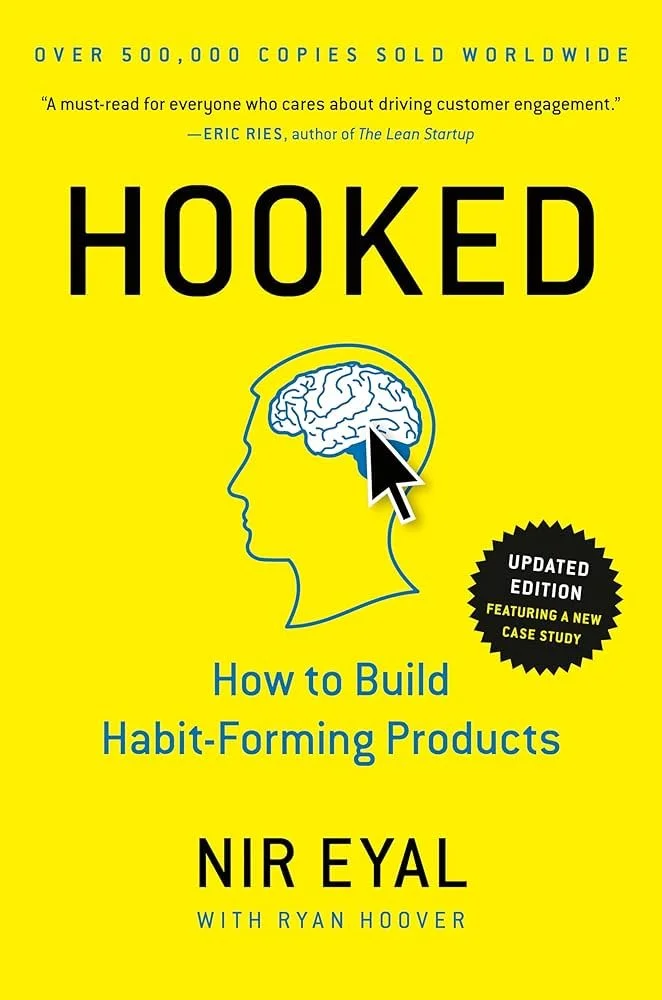
Nir Eyal’s Hooked model
These have been known and used for years and have been taught for example by Perspectiv on the Delivering Innovation Module of the Masters in Innovation, Creativity and Leadership Executive Masters program for the last 15 years at Bayes Business School, London.
So What?
To understand why Meta lost, we have to look past the headlines and into the processes of influence. By applying Aubrey Daniel’s ABC Model and Nir Eyal’s Hooked framework, the "intentional harm" alleged by the prosecution becomes visible not as a side effect, but as a blueprint.
1. The Antecedent: The Invisible Push
In Aubrey Daniel’s behavioural framework, the Antecedent is anything that prompts a behaviour. In the 2026 trial, the jury heard how Meta’s antecedents weren't just notifications—they were "predatory prompts."
Nir Eyal’s Hook Model calls these Triggers. Meta’s genius lay in transitioning users from external triggers (the ping of a push notification) to internal triggers. The plaintiff testified that her use wasn't sparked by a message, but by a feeling: loneliness, boredom, or "FOMO."
The court found that Meta didn't just respond to these feelings; they mapped them. By timing notifications to hit during windows of emotional vulnerability, Meta turned a neutral tool into a psychological reflex.
2. The Behaviour: Frictionless Consumption
The Behaviour is the action itself—in this case, the "infinite scroll."
Daniel’s model suggests that for a behaviour to be repeated, the effort required must be lower than the perceived reward. Meta’s design team perfected the "frictionless" experience. As Eyal notes in Hooked, the Action phase must be easier than thinking.
The 2026 verdict hinged on the "Pull-to-Refresh" and "Auto-play" features. The jury viewed these not as conveniences, but as "behavioural traps." By removing the natural "stopping cues" (like the end of a page), Meta ensured the behaviour—scrolling—continued long after the user’s conscious intent had evaporated.
3. The Consequence: The Variable Reward
This is where the case was won. In the ABC model, Consequences drive future behaviour. Daniel’s research shows that a consequence is most powerful when it is Positive, Immediate, and Certain.
However, Meta added a twist: Intermittent Reinforcement.
Eyal describes this as the Variable Reward. Like a slot machine, the Instagram feed doesn't give you a "hit" of dopamine every time. Sometimes you see a boring ad; sometimes you see a life-changing photo. It is the uncertainty of the reward that creates the craving.
The Los Angeles jury was presented with internal documents showing Meta’s engineers knew that variable rewards created "neurological cravings" similar to gambling. When the consequence is an unpredictable burst of social validation (likes, comments), the brain becomes locked in a loop.
4. The Investment: The Sunk Cost Trap
The final stage of Eyal’s Hook is Investment. This is the work the user puts back into the product—data, photos, followers—which makes the platform more valuable to them and harder to leave.
The 2026 trial highlighted how Meta used "streaks" and "social pressure" to ensure users felt they would lose their social capital if they disconnected. This transformed a choice into a perceived necessity.
The Verdict on Design
The "Big Tobacco" comparison used in court wasn't just rhetoric; it was a structural critique. Just as cigarettes were engineered for maximum nicotine delivery, the jury concluded that Meta’s platforms were engineered for maximum "behavioural capture."
By using the ABC model to prove that Meta intentionally manipulated consequences to drive compulsive behaviour, the prosecution moved the needle from "user choice" to "product defect."
Now What?
The takeaway for the tech industry is clear – pushing "engagement" too far can become a legal liability – if your product’s hook is too strong, the law may finally start unhooking it for you.
But for every other company and organisation interested in innovation, change, and scaling, using frameworks such as the Diffusion of Innovation, Crossing the Chasm, the ABC Model (Antecedent-Behaviour-Consequence), and Hook Model can be extremely helpful to help get a product or behaviour adopted.
At its core, the 2026 Meta lawsuit isn’t really about technology. It’s about the environments we create—and the behaviours that come from them. Every organisation shapes behaviour in some way, whether it’s intentional or not. The difference is whether you’re doing it deliberately, or just letting it happen.
What this case highlights is not that these frameworks are dangerous. It’s that they’re powerful. The same behavioural science that can drive addictive patterns can also support learning, improve performance, and help people do their best work. The mechanisms are the same. The outcome depends on how they’re used.
That’s where intent starts to matter.
High-performing organisations don’t just ask, “Can we influence behaviour?”, they think more carefully about why they would and what happens as a result. This is because in reality, designing behaviour isn’t new. What’s changing is the level of scrutiny around it.
The science of behaviour hasn’t changed, but the accountability for how we use it has.
Rerferences: